Prevent corporate plant disasters by selecting species that match your workspace lighting and establishing a strict watering schedule to avoid root rot or dehydration. Effective office plant care requires monitoring environmental factors such as humidity and temperature while performing regular maintenance like pruning and fertilizing. Utilizing professional plant services can also ensure long term health through expert cleaning and pest prevention.
A wilting fiddle leaf fig in a reception area is more than just a gardening mishap; it is a direct reflection of a facility’s attention to detail. For many facility managers, watching a significant investment in greenery turn into a brown, desiccated liability is a source of immense frustration. These failures often stem from a misalignment between aesthetic ambition and technical reality. Beyond the visual decline, failing foliage can compromise your brand identity and signal neglect to clients and employees alike. In this guide, we will analyze the technical anatomy of corporate plant disasters, from hidden pest infestations to the specific environmental stressors found in Ottawa commercial spaces. You will gain a practical playbook for maintaining vibrant greenery and learn how to vet professional maintenance services to ensure your office landscape remains a strategic asset rather than a liability.
Beyond the Yellow Leaf: Why Corporate Plant Failure is a Brand Liability
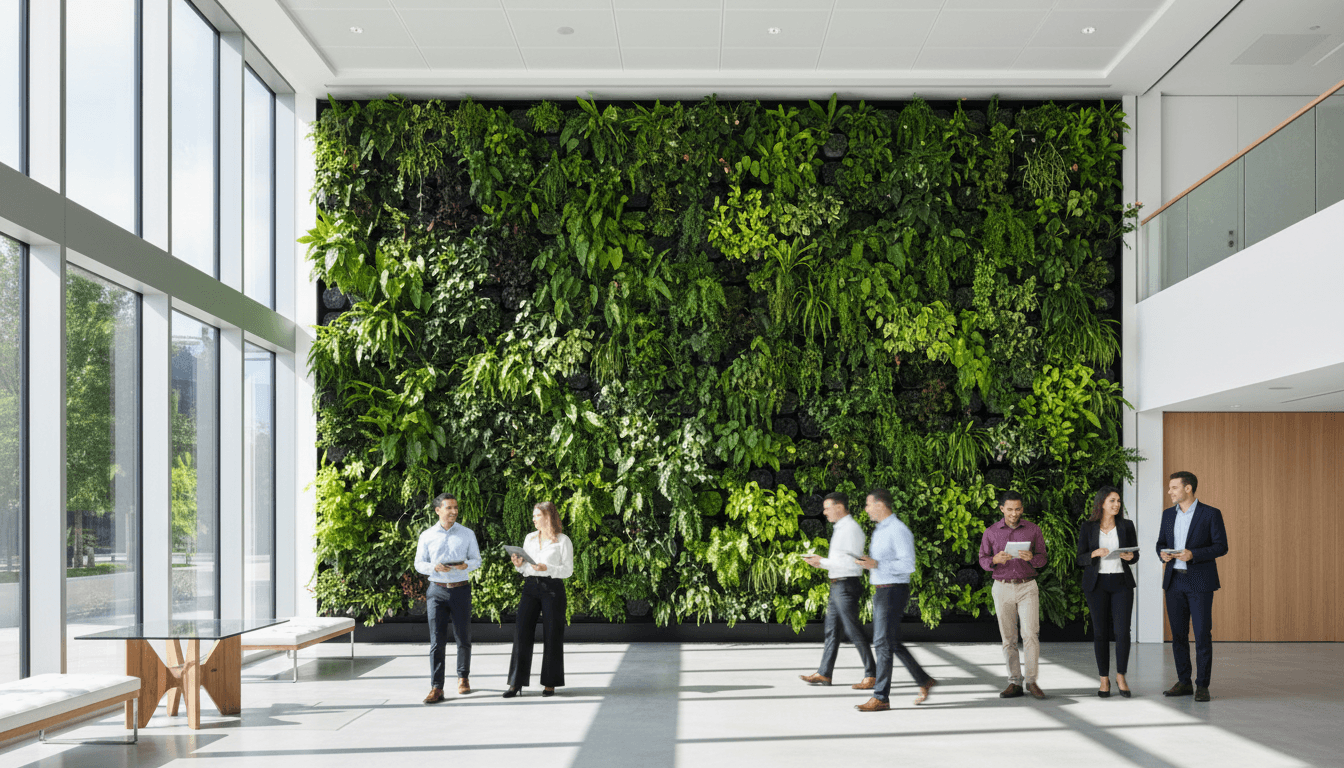
Corporate greenery is often relegated to the realm of office decor or secondary housekeeping tasks. However, within a professional environment, botanical installations are high-value capital assets that require rigorous botanical asset management. When a $10,000 living wall begins to desiccate or a centerpiece Ficus lyrata develops systemic chlorosis, the loss is not merely aesthetic; it is a financial and operational failure.
We frequently encounter the "Zombie Plant" in commercial foyers and boardrooms. These specimens are technically alive, maintaining a respiratory baseline, yet they appear dusty, stunted, or riddled with pathogens. A collection of zombie plants sends a powerful, albeit silent, message to clients and employees about a firm’s attention to detail and institutional health. A neglected vertical garden does not just look poor; it actively detracts from brand equity and degrades indoor air quality.
Effective office plant care in a commercial setting necessitates a shift from reactive watering to proactive technical plant pathology diagnostics. While a dying desk succulent is a minor inconvenience, the spectacular failure of a large-scale integrated system indicates a breakdown in facility infrastructure management. Transitioning from hobbyist habits to data-driven horticultural strategy is essential for protecting the investment in biophilic design.
The Anatomy of a Corporate Plant Disaster: Technical Causes

Diagnosing the decline of commercial greenery requires a shift from viewing plants as isolated organisms to seeing them as integral components of a building’s mechanical and environmental ecosystem. When facility managers ask, "Why are all my indoor plants suddenly dying?" the answer rarely lies in a single missed watering session. Instead, systemic failure usually stems from an environmental shift that triggers a cascade across an entire floor. A change in the building’s air filtration set points or a seasonal adjustment to the HVAC logic can alter the vapor pressure deficit (VPD) of an entire zone, pushing multiple species past their physiological tipping point simultaneously.
Technically, many corporate plant disasters are caused by the following industrial stressors:
HVAC Cycle Volatility: Commercial HVAC systems are typically programmed for human occupancy, meaning they often shut down or enter energy-saving modes on weekends. These 48-hour periods of stagnant air and thermal fluctuations cause acute respiratory stress. Without active airflow, transpiration slows, leading to root zone saturation and the onset of anaerobic conditions.
Photobleaching from LED Arrays: While high-intensity LED arrays are essential for deep-plan office spaces, improper calibration causes photobleaching. When light intensity exceeds the plant’s ability to process photons, chlorophyll molecules break down, turning leaves a ghostly white or translucent yellow. This is a common failure in botanical asset management where lighting is treated as a static fixture rather than a dynamic biological input.
Substrate Toxicity and Osmotic Stress: Improper fertilization schedules in commercial settings often lead to a buildup of mineral salts. Without regular leaching of the soil, these salts reach toxic levels, causing osmotic stress where the roots are physically unable to draw water, even in moist soil.
Professional office plant care at this scale involves technical plant pathology diagnostics to distinguish between nutrient deficiencies and environmental pathogens. For example, what looks like a simple fungal infection might actually be secondary to tissue damage caused by dry, high-velocity air from a nearby supply vent. Identifying these technical triggers is the first step in moving from reactive plant replacement to a stable, bioactive environment.
Pest Infestations as a Facility Management Crisis
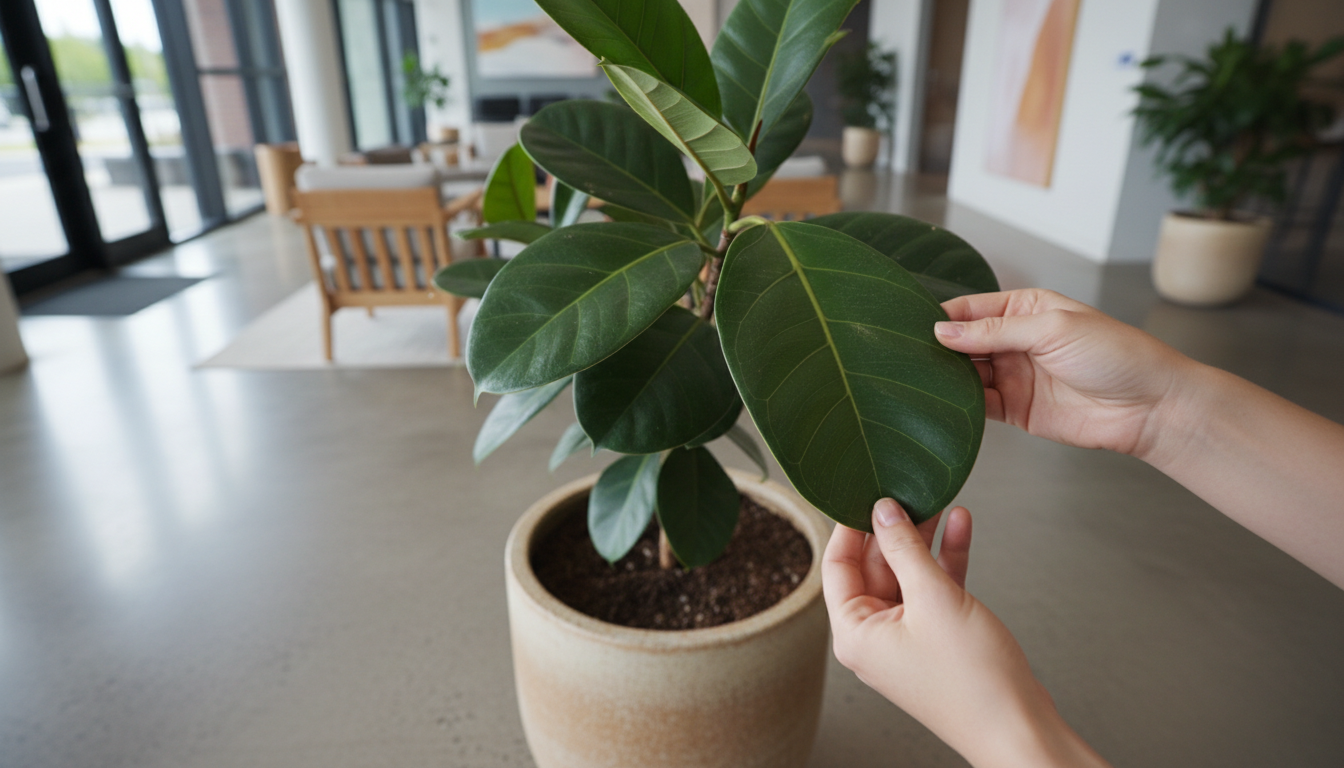
Biological stressors in a commercial environment are rarely contained to a single pot. When an infestation occurs, it must be treated as a facility management crisis rather than a localized gardening issue. The interconnected nature of modern office spaces, particularly those with centralized HVAC systems, creates a highway for pathogens. Fungus gnats, for instance, are not merely a nuisance near the breakroom; their adult populations can migrate through ventilation ducts, spreading larvae across multiple floors and compromising the root systems of geographically distant installations.
Effective office plant care requires a diagnostic approach that accounts for the building’s microclimate. Spider mites are a primary example of an environmental pest; they thrive in the exceptionally dry, high-velocity air found near ceiling diffusers. These arachnids can decimate a collection before visible webbing even appears. To stay ahead of these outbreaks, facility managers should utilize a 10x or 30x magnifying loupe for weekly inspections. This tool allows for the identification of microscopic crawlers or eggs on the abaxial (underside) of leaves, enabling intervention before a population explosion necessitates a total asset replacement.
When assessing the difficulty of eradication, mealybugs represent the hardest infestation to get rid of in a corporate setting. These pests secrete a waxy, hydrophobic coating that shields them from standard topical treatments. In large corporate foyers with high ceilings and architectural specimens, mealybugs retreat into the deep crevices of leaf nodes and trunk fissures where they remain inaccessible to basic cleaning. Resolving such deep-seated issues requires technical plant pathology diagnostics to implement systemic treatment protocols. Integrating these rigorous checks into your botanical asset management strategy ensures that a minor biological vector does not evolve into a building-wide liability.
The Facility Manager's Playbook for Office Plant Care

Transitioning from reactive maintenance to a proactive strategy requires treating greenery as integrated building infrastructure rather than furniture. Effective office plant care is rooted in the same principles as mechanical system maintenance; it relies on data, regular intervals, and specialized tooling. The primary objective is to maintain a state of biological equilibrium where the plant’s metabolic needs are met before it displays visible signs of stress.
Central to this approach is the implementation of a Plant Health Registry. This log should mirror the documentation used for HVAC filter replacements or elevator inspections. By tracking the installation date, species-specific light requirements, and historical moisture data for every specimen, facility managers can transition to a model of botanical asset management that identifies trends before they become failures.
Technical Maintenance Task | Frequency | Objective |
|---|---|---|
Deep Zone Moisture Probing | Weekly | Prevents anaerobic root rot by checking the bottom third of the root ball. |
Technical Leaf Cleaning | Monthly | Removes particulates and dust that block stomata and inhibit photosynthesis. |
90-Degree Specimen Rotation | Monthly | Prevents phototropism and maintains the plant's structural center of gravity. |
Integrated Pathogen Audit | Bi-Weekly | Early detection of larvae or eggs using high-magnification optics. |
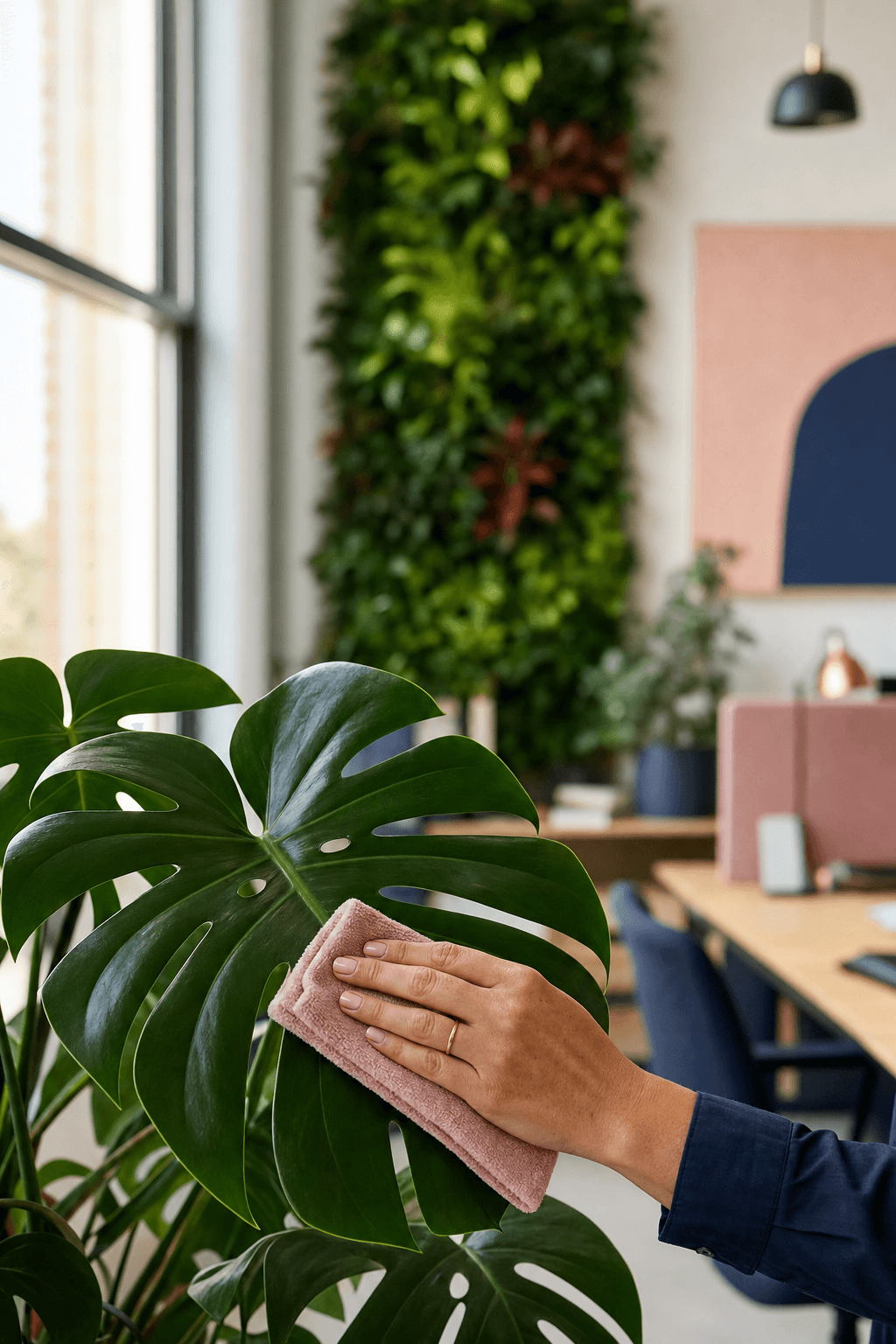
Standardize the use of long-stem soil moisture probes to move beyond the inaccuracy of surface-level checks. In deep commercial planters, the surface can appear dry while the lower root zone remains dangerously saturated. Furthermore, technical leaf cleaning must be prioritized. In an office environment, microscopic dust and debris from ventilation systems coat the foliage; this film acts as a physical barrier to light and gas exchange. Using distilled water or specialized foliar cleansers ensures the plant can perform its primary function of air filtration. If a specimen shows signs of decline despite these protocols, it is time to engage technical plant pathology diagnostics to identify hidden environmental or biological stressors.
Ottawa Specific Environmental Challenges for Commercial Greenery
In the National Capital Region, localized environmental stressors dictate the success or failure of any biophilic installation. Ottawa winters present a unique set of challenges that generic botanical guides overlook. The most critical factor is the precipitous drop in indoor relative humidity. When outdoor temperatures plunge, building heating systems aggressively strip moisture from the air, often reducing relative humidity to below 20 percent. For high value tropical species, this triggers a spike in the vapor pressure deficit, leading to rapid desiccation and necrotic leaf margins.
Facility managers must also proactively manage "draft zones" near lobby entrances and automated revolving doors. During -20 degree days, even a few seconds of exposure to sub-zero air can cause immediate thermal shock, leading to cell wall rupture and total leaf abscission. Furthermore, Ottawa's latitude creates a dramatic seasonal light shift. Between June and December, the available Photosynthetically Active Radiation (PAR) from windows drops by over 60 percent. Without adjusting supplemental lighting arrays to compensate for these dark months, plants enter a state of metabolic starvation. Integrating these local climate variables into your botanical asset management strategy is essential. When these environmental shifts trigger sudden decline, technical plant pathology diagnostics are necessary to distinguish between climate induced stress and underlying disease.
Vetting Professional Office Plant Maintenance Services
Vetting a service provider requires moving past the concept of a "plant waterer" toward a partner in facility infrastructure. Basic services often focus on surface-level tasks like removing dead leaves or maintaining a rigid watering schedule regardless of the plant’s actual metabolic state. In contrast, true botanical asset management treats your greenery as a high-performance system. This level of service prioritizes the optimization of the plant’s environment to ensure long-term ROI and brand consistency.
When evaluating a prospective partner, ask for a sample of their technical plant health report. A professional report should go beyond subjective observations; it must include data-driven metrics. This documentation serves as a record of your office plant care and provides the transparency needed for corporate oversight.
Reporting Metric | Requirement |
|---|---|
PAR/Foot-candle Mapping | Periodic measurement of available light at various points in the installation. |
Substrate Salinity & pH | Tracking mineral buildup to prevent osmotic stress and nutrient lockout. |
Integrated Pest Log | Detailed history of biological sightings and preventative measures taken. |
Soil Moisture Gradient | Readings from multiple depths to ensure root zone health. |
High-tier consulting also involves technical plant pathology diagnostics when systemic issues arise. If a provider cannot explain the physiological cause of a browning margin or a declining canopy, they are managing symptoms rather than solving architectural botanical problems. A professional firm acts as a horticultural engineer, ensuring that your bioactive environment remains a functional asset.