The best commercial indoor trees Ottawa office lobby designs incorporate hardy species like Ficus Nitida, Kentia Palms, or Dracaena varieties that thrive in controlled indoor climates. Professional installation focuses on light requirements and architectural scale; ensuring these living anchors enhance air quality and aesthetics through proper soil management and irrigation.
A cavernous Ottawa office lobby can feel uninviting and sterile; however, many attempts to introduce greenery through large specimen trees end in costly botanical failure. These architectural anchors often struggle against harsh HVAC cycles and inadequate light levels, leading to a diminished brand image rather than a premium experience. Success in integrating living structures into commercial real estate requires an engineering mindset. In this guide, we explore the essential technical considerations for installing thriving indoor trees. You will learn how to select species that withstand local interior climates, design the necessary infrastructure for drainage and weight loads, and specify horticultural lighting for high ceilings. From logistical planning in the urban core to long term botanical asset management, we provide the technical framework needed to ensure your interior landscaping remains a permanent asset rather than a temporary expense.
The Strategic Value of Specimen Trees in Commercial Real Estate
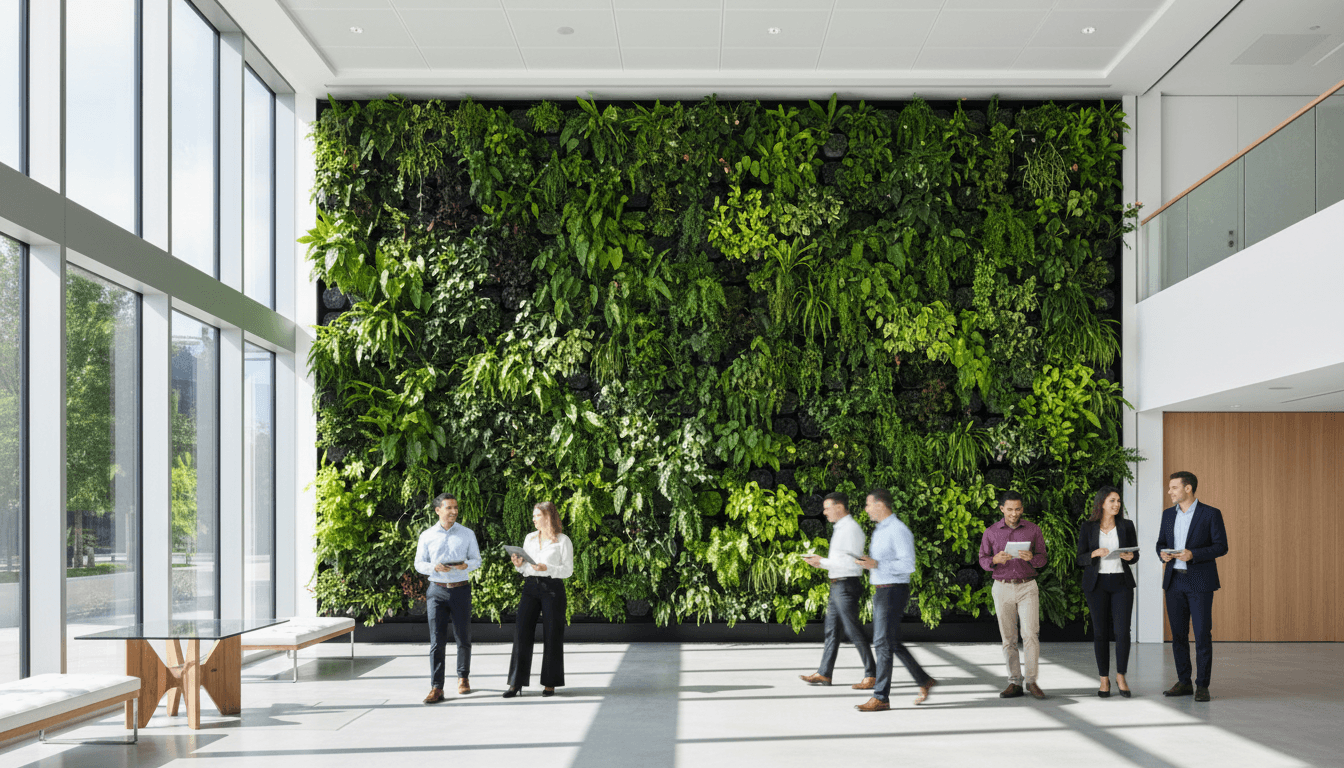
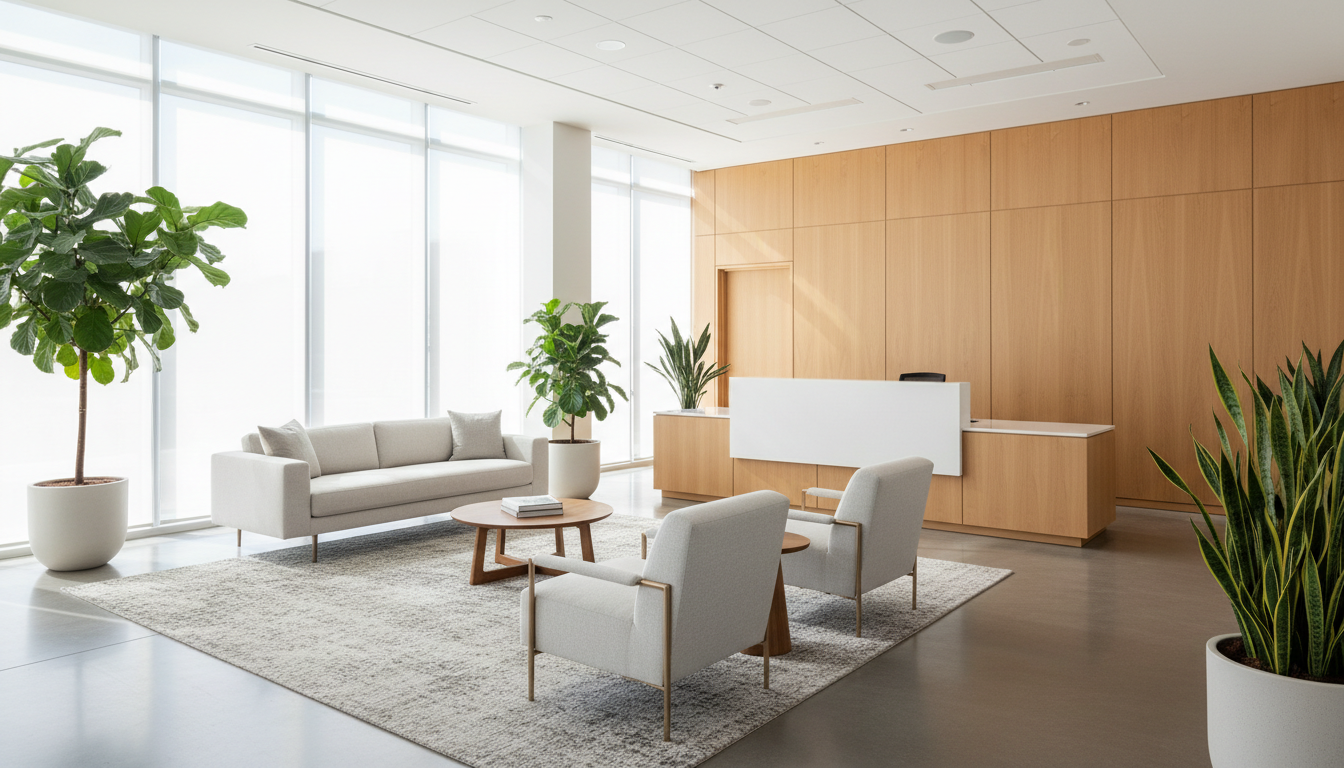
In commercial real estate, specimen trees serve as more than aesthetic flourishes; they function as primary architectural anchors. For property managers, integrating commercial indoor trees in an Ottawa office lobby is a strategic decision that defines the spatial volume of a multi-story atrium. These living installations provide verticality that guides the eye, creating a sense of scale and permanence that static furniture cannot replicate.
From a biophilic design perspective, large-scale greenery acts as a landmark. In expansive lobby environments, these trees facilitate wayfinding and organic traffic flow, intuitively directing tenants and visitors toward reception desks or elevator banks. This is particularly effective in high-traffic corridors where visual clarity is essential for a seamless user experience. By serving as a focal point, a mature tree reduces the psychological stress often associated with cavernous, sterile transit spaces.
The return on investment for such installations is reflected in property valuation and tenant retention. A sophisticated commercial plant portfolio signals a premium, wellness-focused brand identity, distinguishing a property in the competitive National Capital Region market. When a building commits to high-impact botanical features, it communicates a dedication to environmental quality and occupant health. However, maintaining these living assets requires more than basic care. Implementing professional botanical asset management ensures that these significant capital investments continue to appreciate in value rather than becoming a liability. By bridging the gap between botanical science and operational strategy, specimen trees become functional tools for elevating the commercial tenant experience.
Selecting the Right Species for the Ottawa Climate and Interior HVAC

While a lobby provides shelter from the -30°C Ottawa winter, the external environment significantly influences the internal biome. The primary challenge for commercial indoor trees in an Ottawa office lobby is the extreme drop in relative humidity caused by heavy HVAC heating cycles. During these months, indoor air can become as arid as a desert, creating a high-stress environment for species with high transpiration rates. Successful selection depends on balancing aesthetic intent with physiological resilience.
Some species act as reliable workhorses, while others serve as high-maintenance centerpieces that require precise environmental controls.
Species | Light Requirement | Humidity Tolerance | Best Use Case |
|---|---|---|---|
Ficus Amstel King | Medium to High | High | A resilient lobby workhorse with durable, elongated foliage. |
Ficus Lyrata | High | Low to Medium | Iconic architectural statement; requires high-intensity PAR support. |
Adonidia Merrillii | Very High | Low | Provides tropical height; highly sensitive to dry air and spider mites. |
Dracaena Arborea | Medium | High | Structural and rugged; ideal for areas with draft exposure. |
The Ficus Amstel King is often preferred for multi-story atriums because its leaves are physically adapted to handle lower moisture levels compared to the broad, thin leaves of the Ficus Lyrata. While the Adonidia (Christmas Palm) offers an impressive 15-foot canopy, it frequently struggles in the National Capital Region without significant supplemental humidification and specialized lighting.
Equally critical is the sourcing of these specimens. Plante Bureau prioritizes acclimatized trees over greenhouse-fresh stock. Plants coming directly from high-humidity production nurseries often suffer from immediate leaf abscission, or shock, when introduced to the dry air of an Ontario office. We specify specimens that have been held in intermediate conditions to adjust their metabolic rates. This ensures that when a tree is added to your commercial plant portfolio, it is physiologically prepared for the building's specific HVAC profile. Integrating these selections with technical plant pathology diagnostics allows us to stabilize the specimen quickly during the critical first season.
Engineering the Infrastructure: Drainage, Sub-Irrigation, and Weight Loads
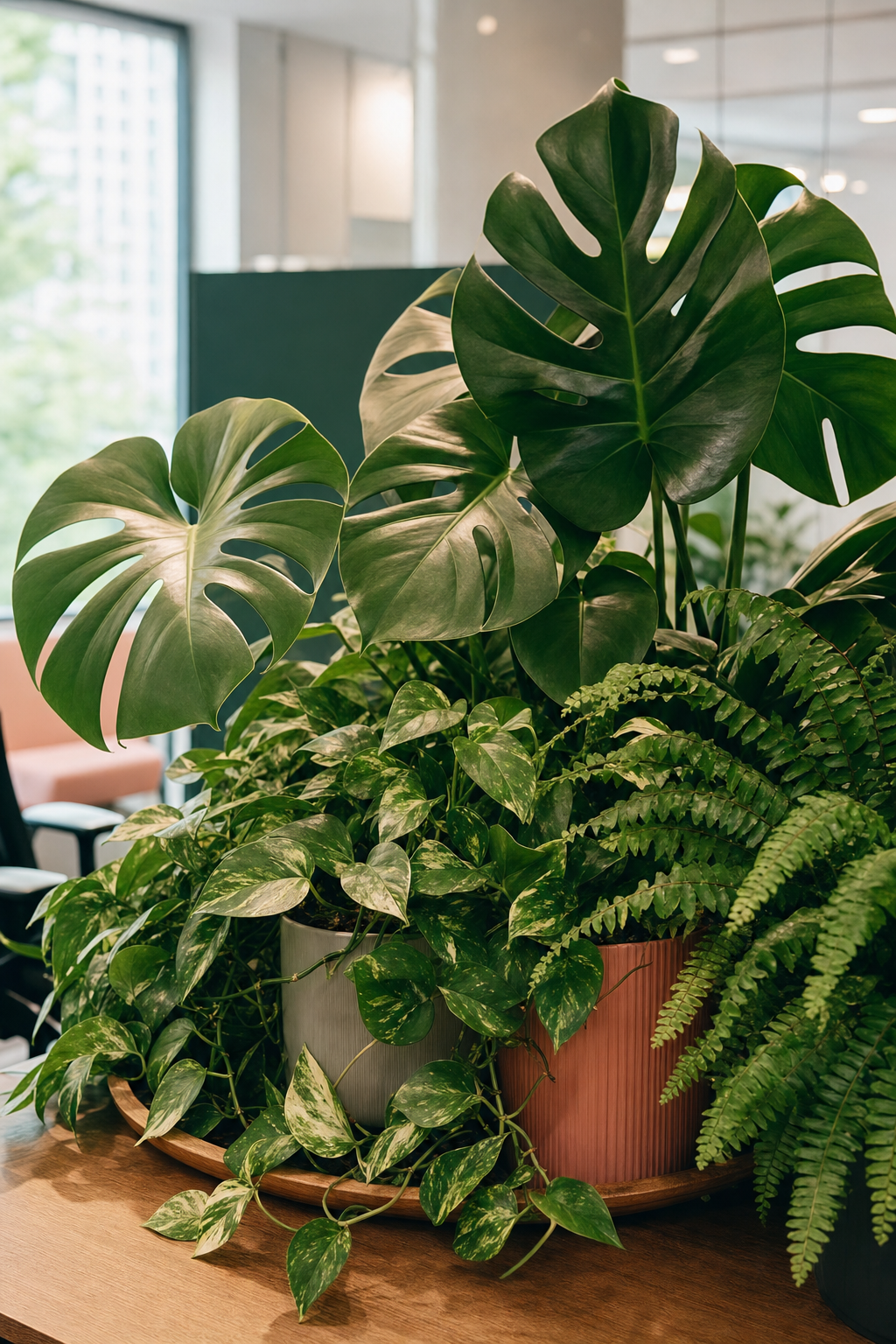
Successfully situating large-scale commercial indoor trees in an Ottawa office lobby requires shifting the mindset from decorative horticulture to living infrastructure. While standalone containers offer flexibility, permanent architectural integration often involves recessed floor pits. These installations demand rigorous engineering to ensure the structural integrity of the building remains uncompromised over decades of growth.
Weight load is a primary concern, particularly when retrofitting existing commercial spaces in downtown Ottawa. A 16 foot specimen tree, coupled with a saturated root ball and structural growing media, can exert a point load of several thousand pounds. Structural engineers must calculate these loads to prevent floor deflection or stress on the slab. For multi-story installations, the risk of moisture migration is mitigated by high-performance, multi-layered waterproof membranes and liquid-applied barriers. These systems prevent irrigation runoff from damaging sub-floor electrical components or structural steel.
Infrastructure Component | Primary Function | Technical Requirement |
|---|---|---|
Integrated Floor Pits | Architectural verticality | Requires structural load-bearing analysis |
Sub-irrigation Reservoirs | Deep-root hydration | Regulated delivery via capillary action |
Geocomposite Drainage | Gas exchange | Prevents anaerobic soil conditions |
Root-Barrier Membranes | Containment | Prevents penetration into building joints |
Effective drainage is non-negotiable for long-term botanical health. We utilize specialized drainage layers, such as lightweight expanded clay aggregate or recycled HDPE geocomposite mats, to facilitate oxygen exchange at the root zone. To optimize hydration, Plante Bureau integrates advanced sub-irrigation systems. These reservoirs provide consistent moisture directly to the root architecture, significantly reducing maintenance frequency while preventing the surface-level saturation that attracts pests. Building this foundation correctly reduces the future need for technical plant pathology diagnostics caused by root hypoxia, ensuring your commercial plant portfolio remains a high-performing asset.
Solving the Light Deficit: Specifying Horticultural Lighting for High Ceilings
Modern commercial glazing in the National Capital Region is engineered to prioritize thermal efficiency and minimize solar heat gain; however, these high-performance coatings often act as a metabolic barrier for large-scale botanical installations. While an atrium may appear bright to the human eye, the UV and infrared coatings on the glass frequently filter out the specific blue and red wavelengths that constitute Photosynthetically Active Radiation (PAR). Without these specific photons, even a well-placed tree will eventually experience a net loss in energy, leading to chlorosis and premature leaf drop.
Standard architectural lighting is measured in lux or foot-candles, units calibrated to human visual sensitivity. For commercial indoor trees in an Ottawa office lobby, we must instead specify horticultural LEDs based on the photosynthetic photon flux density (PPFD) reaching the canopy. This is measured in micromoles per square meter per second (μmol/m²/s). A mature specimen typically requires a consistent delivery of 150 to 250 μmol at its uppermost leaves to maintain physiological stability.
Lighting Metric | Application | Relevance to Tree Health |
|---|---|---|
Lux / Foot-candles | Human visibility | Negligible; does not measure usable plant energy. |
PAR (400-700nm) | Photosynthetic range | Critical; defines the spectrum the tree can actually use. |
PPFD (μmol/m²/s) | Light intensity | Essential; determines the volume of light hitting the leaves. |
Daily Light Integral (DLI) | Cumulative light | Total energy delivered over a 24-hour photoperiod. |
By integrating narrow-beam horticultural projectors that blend into the ceiling architecture, Plante Bureau ensures that your commercial plant portfolio receives the necessary spectral energy without compromising the interior design. This precise application of botanical physics prevents the chronic light starvation that often triggers the need for technical plant pathology diagnostics. Proactive lighting design is the most effective form of botanical asset management, transforming a vulnerable plant into a permanent, bioactive structural element.
Botanical Asset Management: Beyond Basic Watering
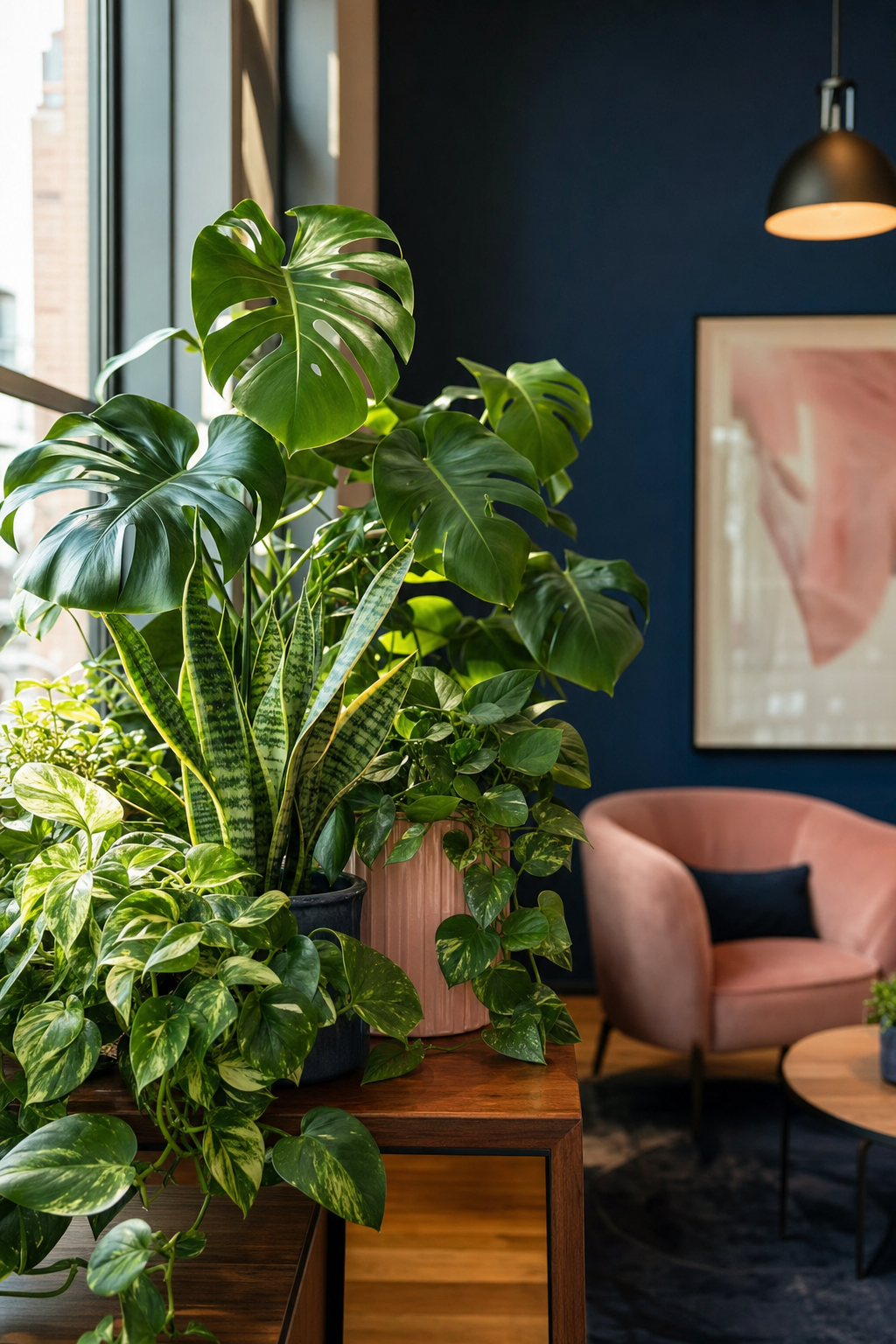
The transition from a vulnerable specimen to a permanent architectural feature requires a fundamental shift in maintenance philosophy. While basic plant care focuses on survival, botanical asset management prioritizes the long term health and structural integrity of these living investments. In the high pressure environment of a commercial indoor trees Ottawa office lobby, a reactive approach is insufficient. Once a 15 foot specimen shows visible signs of decline, the cost of remediation often exceeds the initial installation price.
Technical plant pathology diagnostics are essential for identifying latent issues before they become systemic. Pests such as scale or mealybug can proliferate rapidly in the controlled temperatures of an office atrium, where natural predators are absent. Early detection through microscopic examination and foliar analysis allows for targeted, non toxic interventions that protect your commercial plant portfolio without disrupting tenant operations.
Sustainable health begins below the surface. We utilize mycorrhizal inoculants to establish a symbiotic relationship between fungi and the root system, enhancing nutrient uptake and water efficiency. This biological foundation is supported by precise nutrient management protocols that avoid the salt buildup common in standard commercial fertilizers. When these systems are ignored, a tree becomes a mounting liability. A dead or dying specimen in a premium lobby does more than diminish aesthetics; it signals a failure in operational oversight and compromises the building's brand identity. Treating these trees as bioactive infrastructure ensures they continue to provide measurable value for the life of the property.
Logistics and Installation Challenges in Urban Ottawa
Executing the installation of a 16 foot specimen is a feat of precision logistics that begins long before the tree reaches the property. The most sophisticated commercial plant portfolio depends entirely on a successful, shock-free delivery. In the National Capital Region, the primary logistical hurdle is the thermal environment. Transporting commercial indoor trees for an Ottawa office lobby during a -30°C cold snap requires a continuous, temperature controlled chain. Even a brief exposure to sub-zero air during the transition from truck to loading dock can cause irreversible foliar damage, making the tree a candidate for immediate technical plant pathology diagnostics rather than an architectural centerpiece.
Logistical Component | Technical Requirement | Urban Ottawa Context |
|---|---|---|
Thermal Protection | Insulated, heated transport | Mandatory for any transit below 10°C |
Vertical Clearance | Freight elevator dimensions | Essential for O'Connor and Laurier Street towers |
Load Logistics | Reinforced root ball dollies | Root balls can exceed 1,000 lbs in weight |
Deployment | Off-hours installation | Night or weekend shifts to bypass lobby traffic |
Navigating downtown Ottawa height restrictions and tight loading zones requires specialized equipment and permits. Once on-site, the limiting factor is often the freight elevator. If a specimen exceeds the cab height, our team utilizes specialized tilting frames to safely maneuver the tree without compromising the apical bud or structural branches. By scheduling these high-impact installations during off-hours, Plante Bureau ensures that botanical asset management begins without disrupting corporate operations or tenant flow. This calculated approach transforms a complex delivery into a seamless architectural upgrade.
Integrating large indoor trees into a lobby requires more than just aesthetic sense; it demands a deep understanding of environmental variables like light and airflow. By engineering these living anchors correctly, you can transform an Ottawa office into a vibrant, biophilic sanctuary. If you are ready to bring a sophisticated green vision to life but want expert guidance through the planning stages, our Botanical Consulting services are available. We can help you select the right specimens and systems to ensure your investment thrives for years to come.