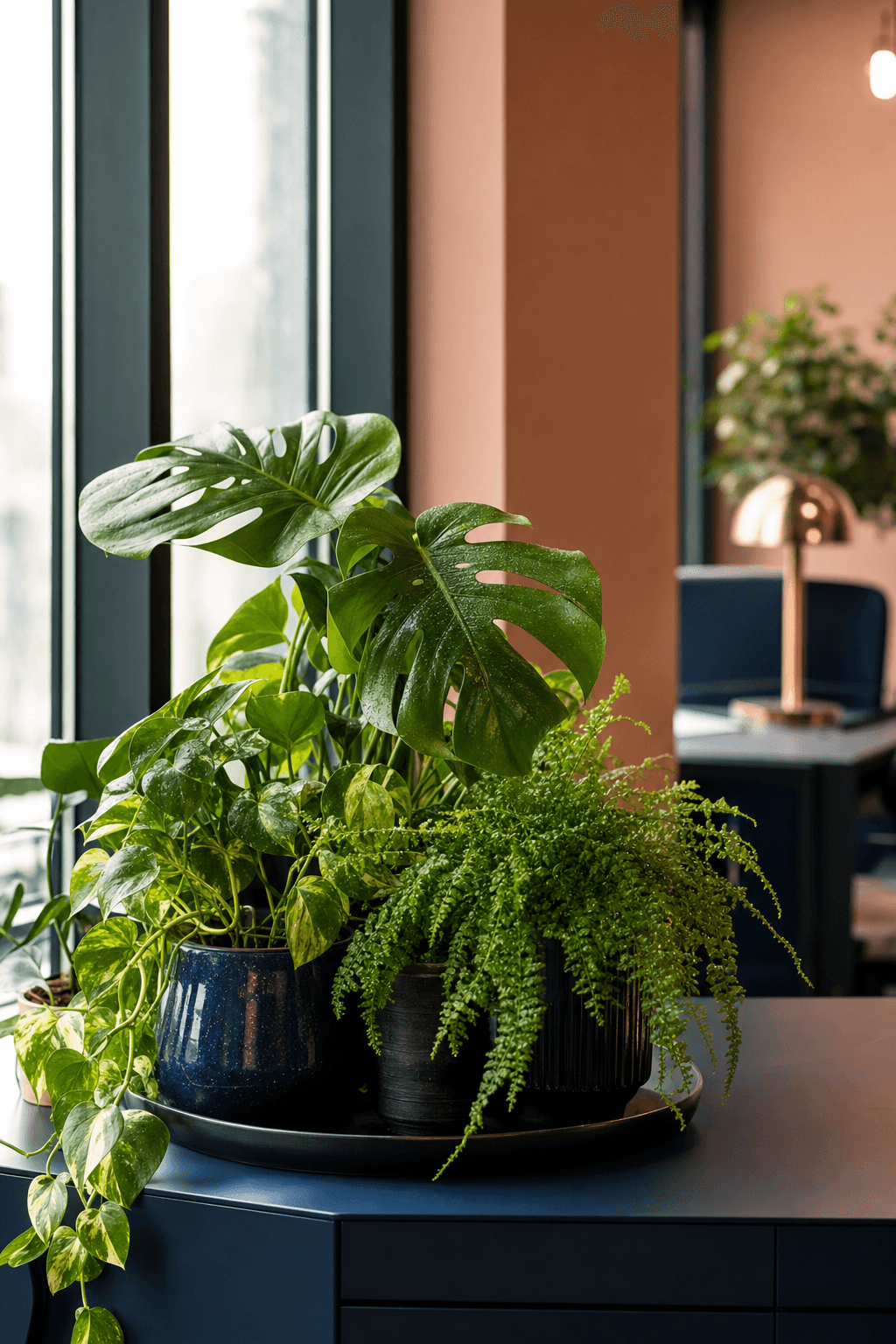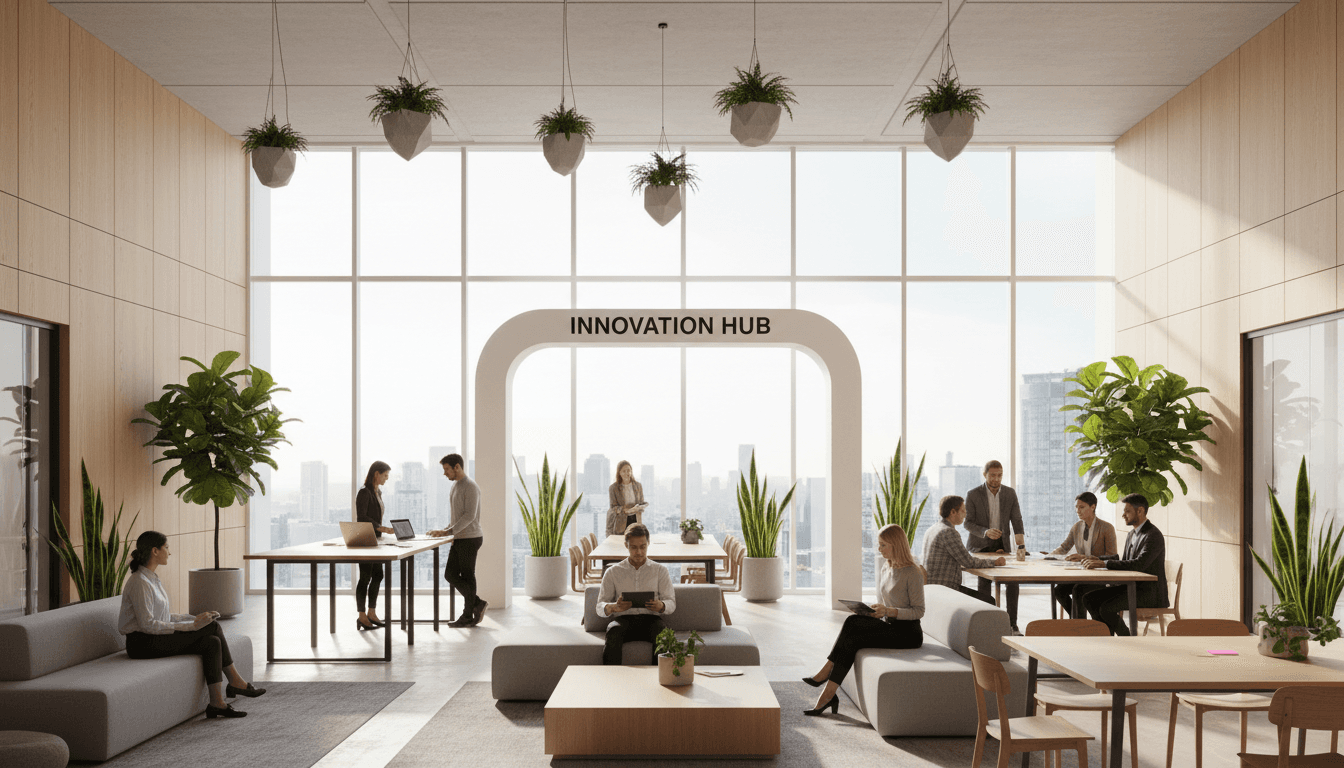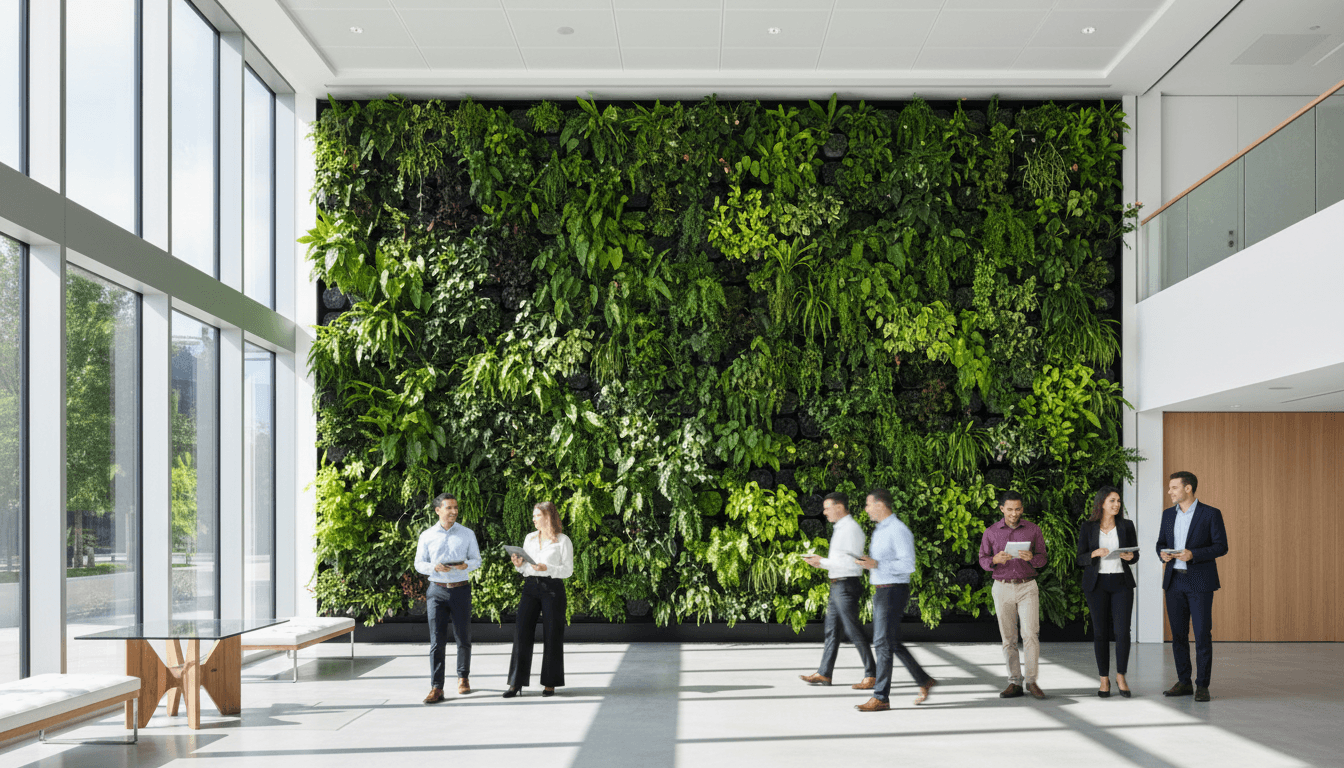
Office plants reduce background noise by absorbing sound energy through their leaves and refracting waves off their stems and branches. This natural acoustic solution is especially effective in open-plan environments where dense foliage can dampen speech and equipment sounds. Selecting office plants noise reduction Ottawa services enables local businesses to create quieter and more productive workspaces using sustainable botanical barriers.
In the bustling corporate hubs of Ottawa, the persistent hum of open floor plans often undermines the focus of even the most dedicated teams. Hard surfaces like glass and concrete, while architecturally striking, create an environment where sound bounces and amplifies; this leads to significant cognitive fatigue. This auditory clutter is more than a minor distraction. It represents a tangible drain on workplace efficiency and employee well-being. At Plante Bureau, we understand that professional environments require sophisticated solutions that balance aesthetics with functional performance. This guide explores the science of botanical acoustics, detailing how specific plant species and strategic living wall installations can effectively absorb, deflect, and refract sound. You will discover the best greenery for Ontario offices and learn how to integrate biophilic buffers to transform your workspace into a focused, tranquil sanctuary.
The Hidden Cost of Noise in Ottawa Modern Workplaces
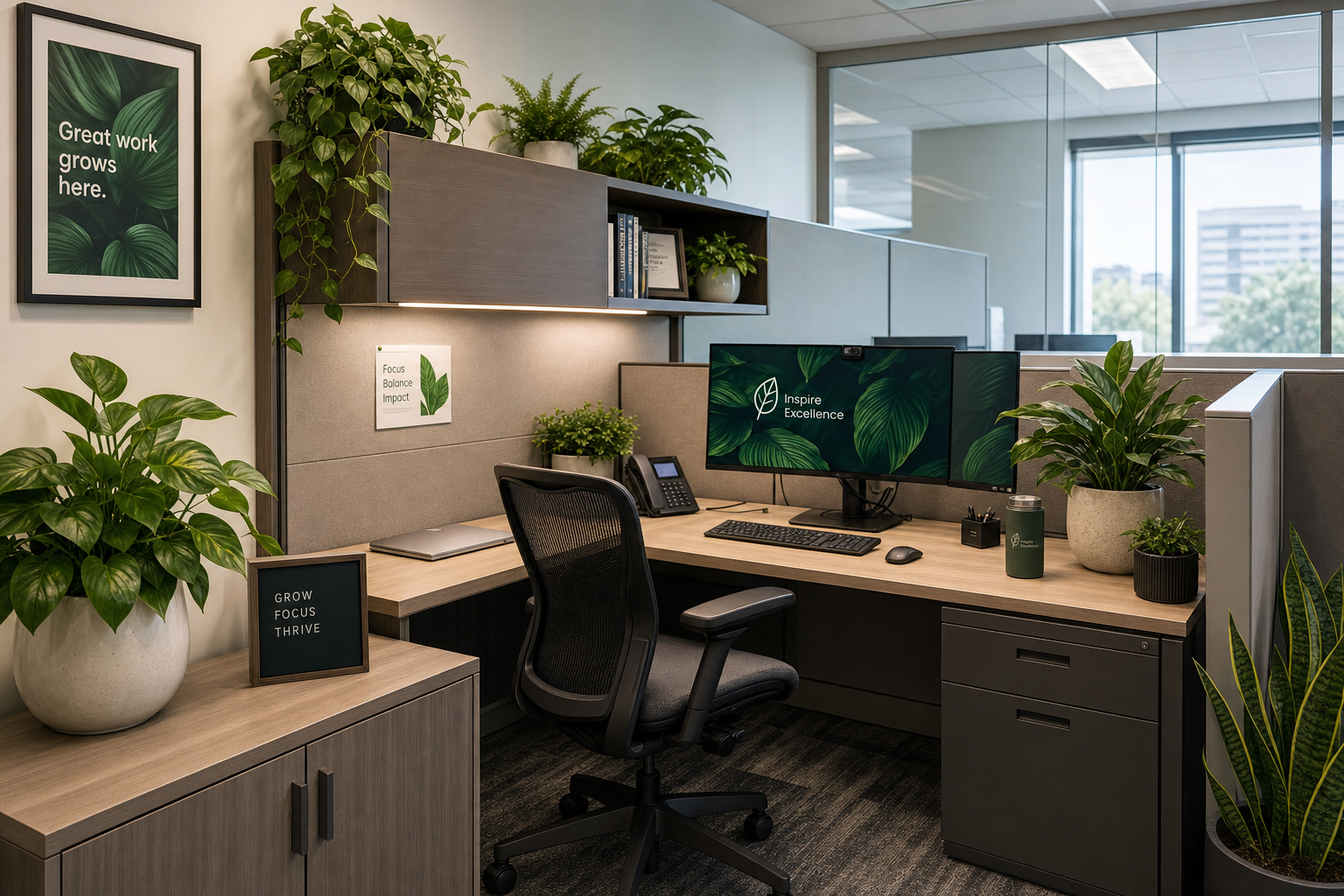
Ottawa’s commercial real estate landscape presents a unique set of acoustic challenges that directly impact corporate efficiency. In the heritage buildings of the ByWard Market, exposed stone and high ceilings create significant reverberation, turning simple conversations into disruptive echoes. Conversely, the sprawling, open-concept tech hubs in Kanata often suffer from a lack of physical barriers, allowing the hum of HVAC systems and the clatter of office equipment to permeate work zones. This ambient noise increases cognitive load; employees must expend mental energy filtering out distractions rather than focusing on high-value tasks.
At Plante Bureau, we view office plants noise reduction Ottawa leaders prioritize not as an aesthetic afterthought, but as an engineered operational strategy. Traditional acoustic solutions often rely on sterile foam panels that fail to address the complex biophilic needs of a modern workforce. Our approach involves sophisticated botanical consulting to analyze the specific decibel peaks and frequency ranges within a space. By integrating bioactive infrastructure, we transform these auditory liabilities into productive environments. Effective sound management requires more than just greenery; it demands a data-driven understanding of how foliage and technical plant pathology diagnostics ensure a thriving, dense canopy that interacts with building physics. You can view these systems in action across our commercial greenification portfolio.
Botanical Acoustics 101: How Plants Absorb, Deflect, and Refract Sound
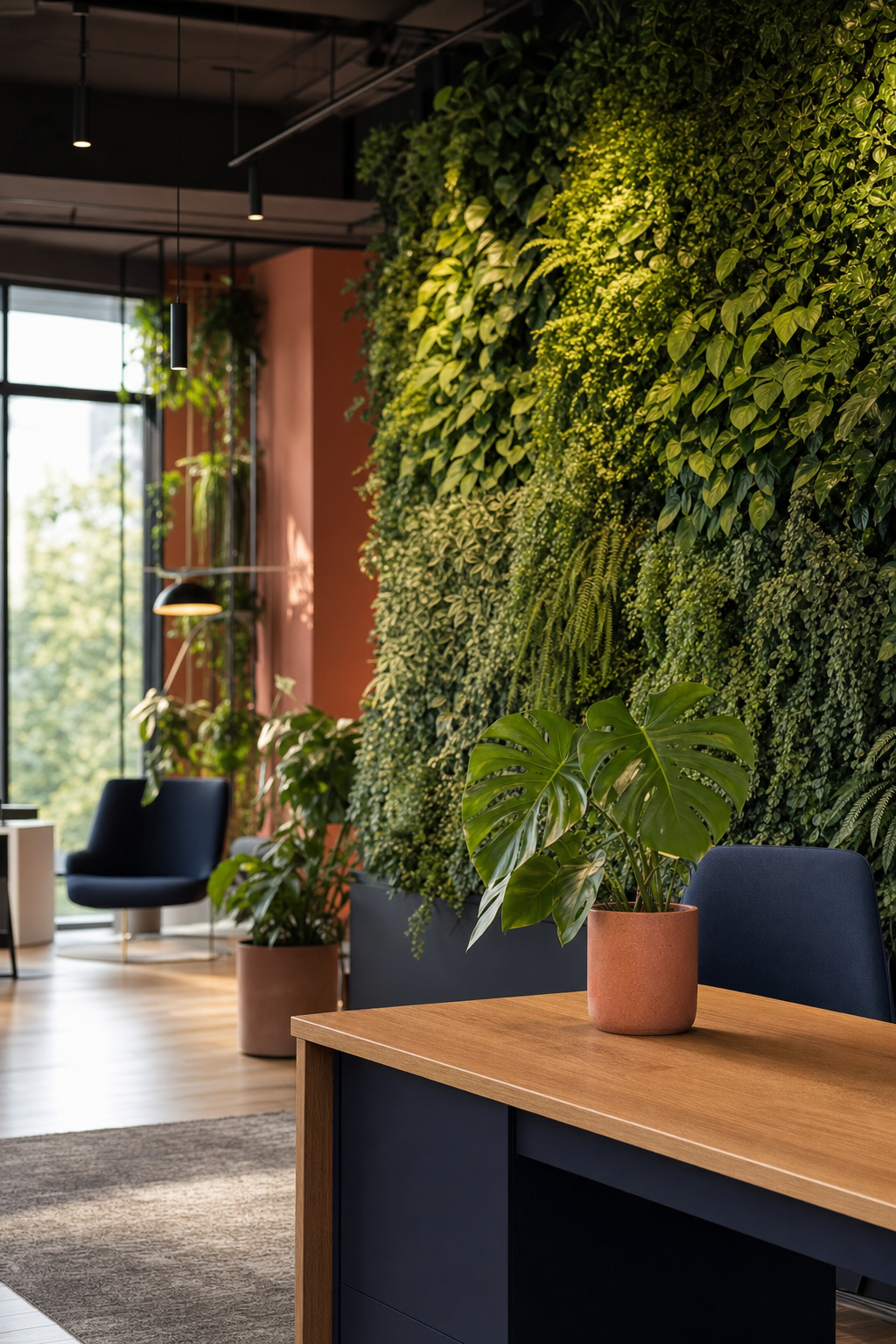
Understanding botanical sound attenuation requires moving beyond the idea of plants as mere decorations; they function as living, complex acoustic panels. By analyzing the physical interaction between sound waves and plant anatomy, we can deploy specific species to address different frequency ranges. This engineered approach to office plants noise reduction Ottawa professionals utilize relies on three primary mechanical processes: absorption, deflection, and refraction.
1. Absorption Plants are highly effective at absorbing sound energy, particularly in the mid to high frequency ranges typical of human speech. When sound waves hit a plant, the flexible leaves and stems vibrate, converting sound energy into kinetic energy and then into a negligible amount of heat. However, the most powerful absorbent component in a botanical installation is often the porous growing media. The substrate acts as a deep sponge for sound; its airy, particulate structure is excellent at trapping low-frequency vibrations that standard office dividers often fail to mitigate.
2. Deflection While soft leaves absorb sound, the more rigid components of a plant, such as woody stems, trunks, and the edges of thick leaves, deflect sound waves. In a typical office with hard glass or concrete walls, sound bounces directly back, creating harsh echoes. Integrating botanical systems introduces irregular, non-linear surfaces that bounce sound in multiple directions. This disruption breaks up standing waves, preventing sound from accumulating in specific corners of a room and creating a more uniform acoustic environment.
3. Refraction Refraction occurs when sound waves are scattered as they pass through a dense, multi-layered canopy. Instead of passing through a space in a straight line, the sound is diffused by the varying angles of the foliage. This scattering reduces reverberation time, ensuring that the tail end of a sound does not linger and overlap with new sounds. High-density installations, maintained through rigorous technical plant pathology diagnostics, ensure the foliage remains thick enough to maximize this refractive effect and maintain the system's acoustic integrity over time.
Best Plant Species for Targeted Noise Reduction in Ontario Offices
Selecting the right flora for an acoustic strategy requires prioritizing biomass and leaf architecture over purely ornamental traits. While all greenery provides some benefit, specific species excel at mitigating the frequencies common in busy Ottawa work environments. Effective office plants noise reduction Ottawa specialists recommend hinges on the total leaf surface area and the density of the plant’s canopy.
Species | Primary Acoustic Function | Leaf Characteristics |
|---|---|---|
Ficus benjamina (Weeping Fig) | High-Frequency Refraction | Small, dense, overlapping foliage |
Ficus elastica (Rubber Plant) | Mid-Frequency Absorption | Thick, fleshy, leathery leaves |
Spathiphyllum (Peace Lily) | Broad-Spectrum Deflection | Wide surface area, high transpiration rate |
The Weeping Fig is a cornerstone of botanical acoustics due to its dense leaf structure and complex branching patterns. The sheer number of small leaves creates a highly irregular surface that is ideal for scattering sound waves. In contrast, the Rubber Plant utilizes its thick, waxy leaves to act as a physical buffer, absorbing sound energy through its increased leaf mass. For spaces requiring maximum surface area, the Peace Lily offers broad, flexible leaves that effectively catch and dampen ambient speech.
It is vital to distinguish these performers from filler plants like delicate ferns or thin-stemmed vines. While aesthetically pleasing, these species lack the surface density and mass required for measurable sound attenuation. To maintain these acoustic properties, we utilize technical plant pathology diagnostics to ensure the canopy remains lush and vibrant. A thinning plant loses its ability to scatter sound; therefore, ongoing botanical consulting is essential for long term acoustic performance. These high-performing species are featured extensively in our commercial greenification portfolio for their dual roles in aesthetics and environmental engineering.
Strategic Placement: Using Planters and Living Walls as Acoustic Buffers
Strategic spatial arrangement transforms individual specimens into an integrated acoustic shield. Proper species selection is only the first phase; the efficacy of office plants noise reduction Ottawa enterprises implement depends heavily on the physical positioning of the bioactive assets relative to sound sources and reflective surfaces.
In open floor plans, sound travels unimpeded across hard, non-porous surfaces. We design green zones as bioactive buffers between high-velocity circulation routes, such as main hallways or elevator lobbies, and deep-focus work departments. By clustering large-format planters in these transition areas, we create a staggered wall of varying heights that captures and diffuses sound before it penetrates the workspace.
Design Strategy | Acoustic Target | Primary Mechanism |
|---|---|---|
Perimeter Green Zones | High-traffic circulation | Refraction and barrier creation |
Deep-Substrate Planters | Low-frequency vibrations | Mass-based dampening |
Vertical Living Walls | High-ceiling reverberation | Multi-layered surface scattering |
While foliage targets the mid to high frequencies of human speech, the significant mass of the substrate in large-scale floor planters provides critical low-frequency dampening. Traditional office partitions are often hollow or lightweight; in contrast, a dense, porous growing medium acts as a heavy dampener for the low-end vibrations generated by heavy foot traffic or mechanical equipment.
For Ottawa commercial sites featuring industrial conversions with cavernous ceilings, verticality is essential. Floor-based greenery often leaves a massive volume of air untreated, allowing sound to reflect off the upper reaches of the walls. We utilize vertical living walls to intercept sound waves at the mid-level height where they reflect most aggressively. This ensures the upper strata of a room do not become a reverb chamber. Executing these layouts requires precise botanical consulting to ensure sightlines remain clear while acoustic shadows are maximized. Through technical plant pathology diagnostics, we ensure the biomass density remains consistent, as seen in our commercial greenification portfolio.
The Living Wall Advantage: Engineered Botanical Systems for High Reverb Spaces

Building on the spatial strategies of green zones, the vertical living wall represents the pinnacle of botanical acoustic engineering for high-reverb environments. Unlike a standard potted specimen, a Plante Bureau living wall is a multi-layered system designed to trap and neutralize sound waves across a wide frequency spectrum. This is achieved through a specific architectural sandwich: a moisture-retentive synthetic felt or fleece, a porous growing substrate, and the living biomass of the plants themselves.
Each layer serves a distinct acoustic purpose in mitigating the harshness of Ottawa’s glass and concrete interiors:
System Layer | Acoustic Contribution | Frequency Target |
|---|---|---|
Foliage Canopy | Scattering and refraction through complex leaf geometry | Mid to High (Speech) |
Growing Substrate | Mass-based absorption and low-frequency dampening | Low (Mechanical/Footfall) |
Structural Felt | Micro-porous surface that eliminates specular reflection | High (Electronic/Sharp sounds) |
For facility managers asking how to block out noise in an open plan office, we often recommend deploying these systems as high-density partitions. These can be fixed architectural features or mobile, double-sided modules that serve as bioactive room dividers. Unlike a glass wall or a thin laminate cubicle, a living wall does not reflect sound back toward the source. Instead, it acts as an acoustic sink, significantly reducing the signal-to-noise ratio in collaborative zones.
Maintaining the structural integrity of this acoustic barrier requires technical plant pathology diagnostics to prevent canopy thinning, which would create "acoustic leaks." Our botanical consulting process ensures that every square foot of the vertical surface remains densely populated with foliage, as documented in our commercial greenification portfolio. When properly engineered, these systems provide both the visual privacy and auditory dampening necessary for deep work in otherwise cavernous corporate spaces.
Integrating Greenery with Traditional Acoustic Design
Biological systems achieve their highest acoustic utility when integrated into a tiered infrastructure alongside traditional sound-dampening materials. While plants are highly efficient at managing mid to high frequencies, such as human speech and electronic alerts, they perform best as a complementary layer to synthetic acoustic panels, baffles, and ceiling clouds. This hybrid approach ensures that the entire frequency spectrum, from low-frequency mechanical hums to high-pitched office noise, is effectively addressed.
We partner with property managers and interior designers during the early phases of space planning to align botanical assets with existing architectural specifications. This ensures that the bioactive environment does not compete with building systems but rather enhances the overall acoustic envelope. Our role is to bridge the gap between static interior design and dynamic biological life.
Acoustic Component | Primary Target | Integrated Benefit |
|---|---|---|
Ceiling Clouds/Baffles | Vertical sound reflection | Controls initial overhead bounce |
Foliage Density | Mid-high frequency diffraction | Scatters speech and sharp sounds |
Acoustic Wall Panels | Horizontal reverberation | Provides baseline NRC-rated absorption |
Large Floor Planters | Low-frequency dampening | Substrate mass absorbs heavy vibrations |
Effective office plants noise reduction Ottawa projects rely on this multidisciplinary synergy. Through our botanical consulting process, we provide the technical data necessary to optimize plant placement for maximum auditory impact. Long term performance is secured through technical plant pathology diagnostics, ensuring that leaf density remains constant and continues to function as a living sound filter. For a look at how these integrated systems transform professional environments, explore our commercial greenification portfolio.
Integrating greenery into your commercial space is a powerful way to reduce ambient noise while boosting employee well-being. By strategically placing specific species, Ottawa leaders can create a more focused and peaceful environment for their teams. If you are interested in optimizing your office layout for maximum acoustic benefits, we can help guide your choices. Our Botanical Consulting services provide the expertise needed to transform your workspace into a quiet sanctuary. Let us help you select the right plants for your unique architectural needs.